Dead Mods Walking: Why Community Projects Fade Out and What You Can Do to Stop It
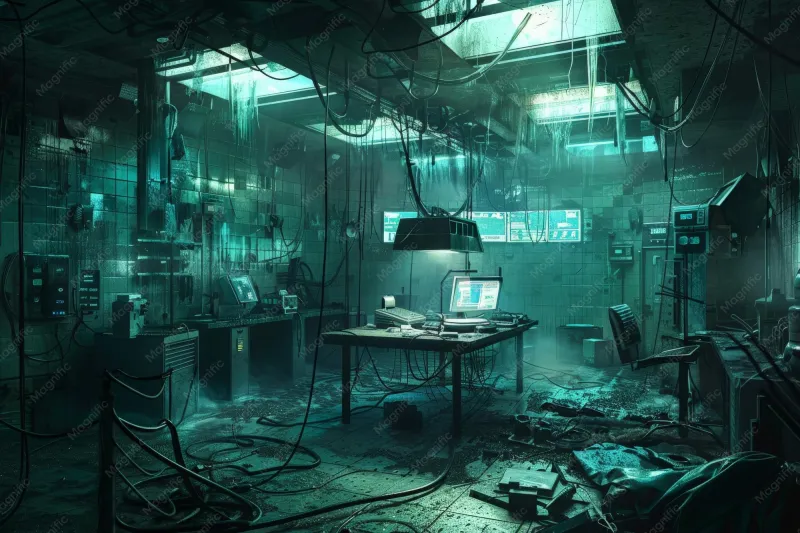
Photo: abandoned computer game development workspace dark room, via img.freepik.com
You know the feeling. You load up your favorite modding site, search for that overhaul you've been following for two years, and find nothing but a forum thread that trails off mid-sentence sometime around last spring. The creator's profile? Inactive. The Discord? Dead. The mod itself? Frozen in an unfinished state that'll never see a final release.
It's one of the quietest tragedies in gaming, and it happens constantly.
Mod abandonment isn't some rare edge case — it's practically the default outcome for ambitious community projects. Studies of modding repositories like Nexus Mods suggest that a significant chunk of listed projects never make it past an early alpha, and even mods with thousands of downloads can vanish when a single creator loses steam. But the reasons behind that disappearance are way more complicated than "the dev got bored."
The Real Reasons Mods Go Dark
Burnout is the obvious culprit, but it's rarely the whole story. Modding is unpaid labor. That's just the reality. A modder might pour 20-hour weekends into a project for months, driven purely by passion — and the moment real life demands more of their attention (a new job, a move, a family situation), the mod becomes a casualty.
"I had about 4,000 people following my Fallout 4 settlement overhaul," says Marcus T., a modder based in Austin who eventually revived his project after an 18-month hiatus. "When I stopped updating, nobody knew I was dealing with a cross-country move and a new full-time gig. I felt guilty every time I saw a comment asking if the mod was dead. Eventually that guilt just made me avoid the whole thing."
That avoidance spiral is something a lot of creators recognize. The longer you're away, the harder it is to come back. Backlogs pile up. Engine versions change. What was once a manageable project starts to feel like a mountain.
But burnout is just one piece. Platform and licensing changes are increasingly brutal for mod preservation. When a game's developer updates its EULA, restricts modding tools, or migrates to a new engine, entire ecosystems can collapse overnight. The situation with various Bethesda titles over the years, or the chaos that followed Unity's controversial pricing changes in 2023, showed exactly how fragile the modding infrastructure can be when it's built on someone else's platform.
Then there's the tool dependency problem. Mods often rely on frameworks — think SKSE for Skyrim or similar scripting extenders — that are themselves maintained by volunteers. When those foundational tools break or go unmaintained, every mod built on top of them becomes a ticking clock.
When Communities Step Up
Here's where it gets interesting: some of the most resilient mods in existence today were technically dead at some point. They survived because someone in the community refused to let them go.
Jenna R., a software developer in Seattle, took over a popular Stardew Valley content expansion after its original creator disappeared in 2021. "The original dev had posted maybe 60% of what they'd planned. I reached out through every channel I could find, got no response, and eventually decided to fork it with full credit to them. I've since added two new characters and fixed about 40 bugs."
Forking — taking an open-source or permissively licensed mod and continuing its development independently — is one of the most powerful tools the community has. It's not always clean or drama-free, but when done respectfully, it can extend a mod's life by years.
The key word there is "permissively licensed." A lot of mods exist in a legal gray zone because creators never explicitly stated what others can do with their work. If you're building a mod right now, slapping a clear Creative Commons or similar open license on it is one of the most community-friendly things you can do.
Tools for Preservation Before It's Too Late
The modding community has developed a growing toolkit for fighting digital extinction, and more players should know about it.
The Internet Archive (archive.org) remains the gold standard for backing up mod files. If you love a mod, archive it. Don't wait for the creator to do it. A quick Wayback Machine save of the mod page combined with a file upload to the Archive can preserve years of someone's work against a server going dark.
ModDrop and GitHub are increasingly popular for hosting mod files with better versioning and backup options than traditional game-specific platforms. Encouraging your favorite creators to mirror their work there adds a layer of redundancy.
Community preservation projects like the ones organized around older Morrowind and Oblivion mods have shown that organized fan efforts can systematically archive entire mod ecosystems. If your game community doesn't have one, starting a dedicated Discord channel or subreddit thread for preservation is a low-barrier first step.
Some communities have also started building mod "wills" — formal handoff documents where creators designate who can continue their project if they go inactive. It sounds overly formal for what's essentially a hobby, but for large-scale projects with active userbases, it's a genuinely smart move.
What You Can Do Right Now
You don't have to be a developer to help. Some of the most effective preservation work is just... documentation. Detailed changelogs, installation guides, compatibility notes — this stuff lives and dies with the original mod page, and recreating it after the fact is brutal.
If you're a regular user of a mod you love, consider:
- Leaving detailed, constructive feedback so creators feel seen and motivated
- Archiving the mod and its documentation somewhere redundant
- Joining or starting a community around the mod so it has social infrastructure beyond one person
- Reaching out respectfully if a creator goes quiet — sometimes a single encouraging message is enough to pull someone back in
And if you're a creator feeling the burnout creeping in? Talk about it. Post a quick update. The communities built around mods are remarkably understanding when developers are honest with them. Silence is almost always worse than transparency.
The mods we love don't have to disappear. They just need communities willing to treat them like the cultural artifacts they actually are.