When the Door Gets Slammed: How Publishers Are Accidentally Funding the Next Generation of Indie Devs
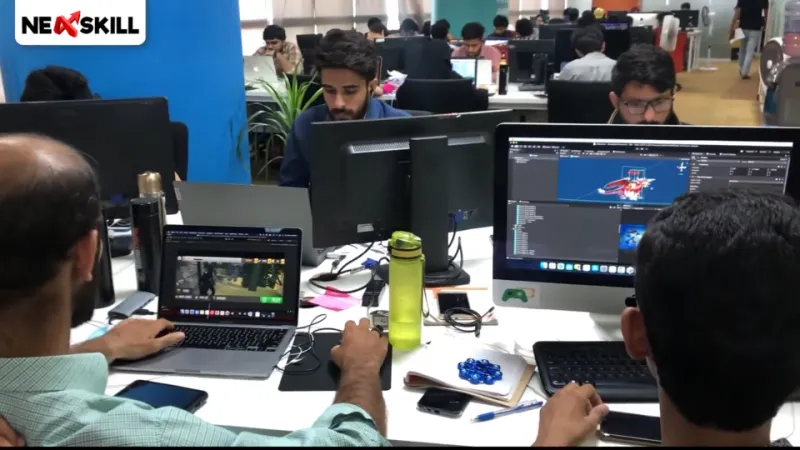
Photo: NeXskill Trainings, CC BY 4.0, via Wikimedia Commons
There's a particular kind of frustration that every modder knows. You've got the idea. You've got the time. You've got the skill, or at least enough of it to get started. And then you hit the wall — a EULA that bans commercial derivatives, a kernel-level anti-cheat system that flags your mod tools before you've written a single line, or a closed platform that simply won't let outside files touch its precious executable. That frustration used to end with modders shelving their ideas or routing around the obstacles as best they could.
Increasingly, it's ending with them opening up Unreal Engine or Unity and starting something entirely new.
This isn't a fringe trend. It's a quiet exodus, and the gaming industry is only just beginning to reckon with what it actually means.
The Walls Keep Getting Higher
Modding has always operated in a gray zone. Publishers tolerate it when it drives engagement and extend the commercial lifespan of their titles. They clamp down when it threatens monetization, steps on DLC territory, or creates legal headaches. That tension is old news. What's changed is the density of the obstacles.
Kernel-level anti-cheat systems like Vanguard and EasyAntiCheat — designed primarily for multiplayer integrity — have become standard even in titles where competitive cheating isn't a serious concern. These systems don't just block cheaters. They often block the memory-reading and file-injection techniques that modders have relied on for decades. A tool that worked fine in 2019 can trip a false positive in 2024 and get your account flagged in the process.
At the same time, live-service architecture has replaced the static, moddable game files that once made titles like Skyrim or Fallout 4 such fertile ground. When a game is constantly pulling data from servers and updating in the background, the traditional mod workflow — unpack, edit, repack, inject — starts to break down in ways that are genuinely difficult to work around.
And then there's the legal layer. Platform holders have gotten more aggressive about what constitutes an acceptable use of their IP. Fan projects that existed for years in a comfortable gray area have received cease-and-desist letters. Beloved total conversion mods have been pulled. The message, intended or not, is clear: you're a guest here, and guests don't get to redecorate.
The Engine Escape Hatch
Here's the thing about creative people who hit a wall: they don't always give up. Sometimes they walk around it.
Epic's decision to make Unreal Engine 5 free for projects under a certain revenue threshold was genuinely transformative. Unity, despite its recent and very public stumble with the runtime fee controversy, still commands a massive share of the indie development space. Both engines come with professional-grade documentation, massive community forums, and YouTube tutorial libraries deep enough to drown in. The barrier to entry for building something from scratch has never been lower.
For a modder who already understands game logic, asset pipelines, and player experience design, that barrier is practically nonexistent. These aren't beginners fumbling through their first script. These are people who spent years learning how games work from the inside out, often with no formal training and no paycheck, purely because they loved it. Giving them a blank canvas and a free engine isn't a leap — it's a natural next step.
You can see the results in the indie space right now. A striking number of successful small studios are staffed by people whose resumes include years of modding work. The skills transferred directly. The motivation was already there. All that changed was the address.
What Publishers Are Actually Losing
It would be easy to frame this as a win for creativity and leave it at that. But there's a real cost on the publisher side that deserves a hard look.
Modding communities are, historically, one of the most effective long-tail marketing tools in gaming. Skyrim is still selling in 2024. A significant part of that is the mod ecosystem keeping the game alive and visible in content creator spaces, on social media, and in gaming conversations. The same is true for games like Minecraft, Stardew Valley, and Terraria — titles that actively embraced modding and reaped enormous benefits in sustained player engagement and cultural relevance.
When publishers lock down their ecosystems, they're not just inconveniencing hobbyists. They're cutting off the community energy that keeps older titles breathing. They're losing the free QA work that modders do when they dig deep into a game's systems. They're losing the pipeline of talented creators who might otherwise have built careers in their orbit — as hired modders, as community managers, as eventual studio employees.
And they're losing the goodwill. That part shouldn't be underestimated. The gaming audience in 2024 is acutely aware of when companies are treating them as revenue sources versus partners. A publisher that actively supports modding signals something about its relationship with its players. A publisher that doesn't signals something too.
The Talent Drain Is Already Happening
Talk to modders who've made the jump to independent development and a pattern emerges pretty quickly. Most of them didn't want to leave. They wanted to keep working in the worlds they loved, with the characters and systems they'd already spent years mastering. But the friction got high enough, or the legal risk felt real enough, or the community they'd built around a specific game simply evaporated when the publisher abandoned it.
So they left. And they took everything with them — the skills, the design instincts, the player empathy, the relentless iteration mindset that modding builds better than almost any formal education. Some of them are making genuinely excellent games now. Games that are eating into the market share of the very publishers who made modding too difficult to bother with.
There's an irony in there that's almost too neat to be real. But here we are.
Can the Trend Reverse?
It's not impossible. A few publishers have figured out that open modding ecosystems are a competitive advantage, not a liability. Valve's Steam Workshop is still the gold standard for mainstream mod distribution. Bethesda's Creation Kit, whatever its limitations, signals an intent to keep the community involved. Some smaller studios have gone even further, releasing full source code or building modding support directly into their core design philosophy.
These examples exist. They're just not the norm, and they're not coming from the biggest players in the space.
If the industry wants to stop the exodus — and it should, because the talent walking out the door is genuinely exceptional — the answer isn't complicated. Lower the legal barriers. Design anti-cheat systems that don't nuke legitimate modding tools as collateral damage. Build official mod support into development pipelines instead of bolting it on as an afterthought. Treat the community like a partner.
The creators are still out there. They're still passionate. They're still building wild, ambitious things in their spare time for no pay and no guarantee of recognition.
The only question is whether they'll keep building in your game's world — or whether they'll keep building in their own.