From Fan Favorite to Official Feature: When Modders Wrote the Next Chapter

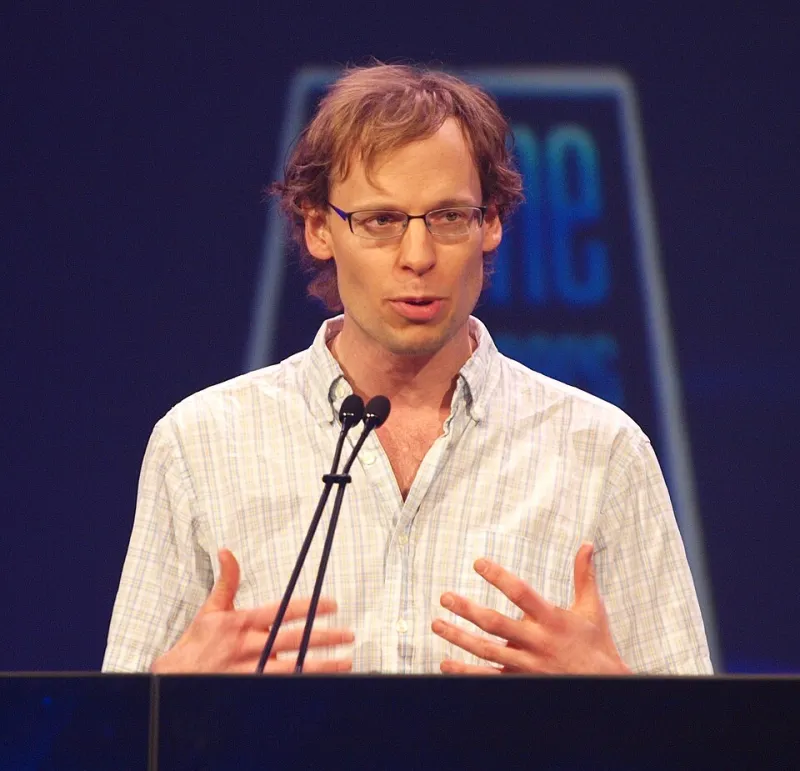
Photo: Digital Concepts DC Studios Inc., Public domain, via Wikimedia Commons
There's a particular kind of validation that most modders never expect to receive. You spend months — sometimes years — building something inside a game engine you don't own, for a community you love, with zero guarantee anyone will even download it. Then one day, a developer emails you. Not to send a cease-and-desist. To say: we want to make this real.
It sounds like the plot of a feel-good indie film, but it's happened more often than you'd think. And every time it does, it reshapes how the gaming world understands the relationship between studios and the communities that keep their games alive long after launch day.
The Moment a Mod Outgrows Its Origins
The journey from hobbyist upload to official content rarely follows a straight line. Usually, it starts with a mod that solves a problem the developers either didn't notice or didn't prioritize — better AI pathfinding, a reworked inventory system, a questline that fills in a lore gap the base game left gaping open. Players download it, love it, and then refuse to play without it.
That last part is key. When a mod becomes load-order essential for a significant chunk of a game's player base, it stops being optional content and starts being a community standard. Developers notice. Publishers notice. And sometimes, quietly, those features start showing up in official patches.
The Skyrim modding scene is probably the most visible example of this pipeline in action. Bethesda has spent years watching community creations — everything from UI overhauls to expanded follower systems — and folding the best ideas into Skyrim Special Edition, the official re-releases, and eventually The Elder Scrolls Online. It's not always a direct copy-paste, but the inspiration is rarely subtle.
When Credit Follows the Creation
Here's where it gets complicated. Not every studio that borrows from modding culture makes a point of acknowledging where the idea came from. Some do — and those moments have become genuinely legendary in gaming communities.
Valve's relationship with its modding community is probably the most documented case study in the industry. Counter-Strike started as a Half-Life mod built by Minh Le and Jess Cliffe in 1999. Valve didn't just incorporate it — they hired the creators and turned it into one of the best-selling franchises in PC gaming history. Team Fortress followed a similar path. These weren't just mods that influenced official games; they became official games, creators included.
More recently, the Forgotten City mod for Skyrim — a mystery-driven standalone quest built by Nick Pearce — was eventually developed into a full commercial release on its own. Pearce didn't need Bethesda to validate his work; the community already had. But the fact that a Skyrim mod became a critically acclaimed standalone title speaks volumes about how seriously the industry has started treating community creation.
The Developer Perspective: Risk, Respect, and Royalties
For studios, incorporating a community mod into official canon isn't always a straightforward decision. There are legal considerations — who owns what when a mod is built inside a licensed engine? There are design questions — does the mod's vision actually align with where the franchise is heading? And there's the ever-present risk of backlash from the modder's original fan base, who sometimes feel that official adoption dilutes or misrepresents what made the original creation special.
Some developers handle it gracefully. Others... less so. The modding community has a long memory, and studios that have absorbed community ideas without credit have faced very public callouts. The internet doesn't forget, and neither does a passionate player base.
The studios that tend to navigate this best are the ones that treat the modding community as a genuine creative partner rather than a free R&D department. That means early communication, transparent credit, and — ideally — some form of compensation, whether financial or through official recognition.
What It Means for the Modder
Ask anyone who's had their mod go official, and you'll hear a version of the same conflicted emotion: overwhelming pride wrapped around a quiet, complicated grief. The thing you built for your community, the thing that was yours, now belongs to something bigger.
Some modders describe it as watching a kid leave home. Others are purely thrilled. A lot depends on how the studio handles the transition — whether the original creator is brought into the conversation or simply observed from a distance while their ideas get repackaged.
What's consistent is the ripple effect on the broader modding community. Every time a mod gets officially recognized, it sends a signal to every other creator grinding away in their free time: this work matters. It can be discovered. It can change things. It can outlast the version of the game it was built for.
The Feedback Loop Nobody Planned
What's emerged over the past two decades is something neither the studios nor the modders deliberately designed — a genuine creative feedback loop. Developers release a game. Modders find the edges of it and push past them. Studios watch what resonates, take notes, and build the next game with those experiments in mind. Then the modders push those edges further.
It's messy and informal and almost never properly credited, but it's also one of the most productive creative relationships in entertainment. No other medium has anything quite like it — where the audience doesn't just consume the work but actively rewrites it, and the original creators are watching closely enough to learn.
Next time you load up a mod that feels suspiciously polished — one that patches a flaw so obvious you can't believe the developers missed it — consider the possibility that the developers didn't miss it at all. They just let the community fix it first.
And maybe, quietly, they're already taking notes for the sequel.