Show Me the Money: How Smart Modders Are Getting Paid Without Losing Their Soul
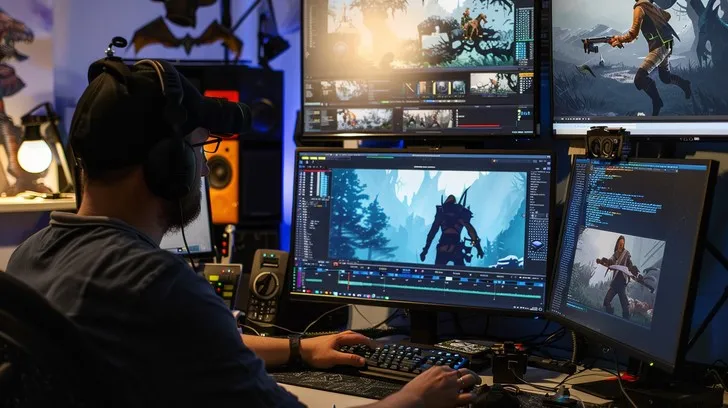
Photo: person working on computer game development creative workspace, via images.stockcake.com
For a long time, the unspoken rule in modding was simple: you do it for the love of the game. You pour hundreds of hours into a project, drop it on Nexus Mods or a community forum, and watch the download counter climb. The reward was rep, maybe a few kind words in the comments, and the quiet satisfaction of knowing you made someone's game better. Money wasn't part of the conversation.
That's changing — fast.
A new wave of creators is proving that sustainable income and creative independence aren't mutually exclusive. They're not selling out to publishers or locking their best work behind paywalls. Instead, they're building smart, community-friendly revenue models that keep the lights on without torching the goodwill they've spent years earning.
So how are they doing it? We dug in.
The Patreon Playbook
If you've spent any time in modding circles lately, you've probably noticed that Patreon links are showing up everywhere — in mod descriptions, Discord bios, YouTube outros. And for good reason: it works.
The key, according to modders who've built steady subscriber bases, is framing. Nobody wants to feel like they're paying for something that used to be free. The creators who do this well position Patreon as a support mechanism, not a paywall. Early access to development builds, behind-the-scenes update logs, and exclusive Discord roles are the kinds of perks that feel additive rather than extractive.
Marcos, a Skyrim modder based out of Austin who's been building quest expansion packs for going on six years, puts it plainly: "I tell my patrons upfront — everything I make eventually goes public for free. You're not buying the mod. You're buying me more time to make it better." His Patreon sits at a modest but stable subscriber count that covers his software costs and then some. More importantly, his community trusts him.
Ko-fi operates on a similar philosophy but with even lower friction. It's essentially a tip jar with optional membership tiers, and a lot of modders prefer it precisely because it feels less transactional. There's no expectation of deliverables. Someone downloads your mod, loves it, and throws you five bucks. Clean and simple.
Asset Licensing: The Under-the-Radar Revenue Stream
Here's one that doesn't get talked about nearly enough: selling or licensing original assets.
If you've spent years building high-quality 3D models, custom textures, or original music for your mods, those assets have real market value beyond the mod itself. Platforms like the Unity Asset Store, Fab (formerly the Unreal Marketplace), and even itch.io let creators sell standalone assets to indie developers, hobbyists, and other modders who want to build on your work.
Jenna, who started out making texture overhaul mods for survival games and now runs a small digital asset shop, describes it as "the best passive income I've found in this space." She still releases mods for free — that's her community presence, her calling card. But the assets she creates in the process get cleaned up, packaged, and listed for sale. "A lot of indie devs don't have the budget for custom art," she says. "But they'll pay twenty bucks for a solid rock texture pack. That adds up."
This model works especially well for modders whose technical skills have grown to genuinely professional levels. If you're building assets that look like they belong in a commercial release, there's a market for that work beyond any single game community.
Sponsored Mod Packs: Proceed With Caution
Sponsored content has made its way into modding, and the reception has been... complicated.
The concept makes sense on paper: a brand or developer pays a modder to create or curate a mod pack that features certain content, tools, or themes. Done transparently, it's a legitimate arrangement. Done badly, it's a trust-destroying mess.
The modders who've navigated this successfully are obsessive about disclosure. Every sponsored element gets labeled. Every partnership gets announced publicly before the mod drops. "Your community will forgive you for taking money," says Derek, who mods for a major open-world RPG and has worked with a couple of indie tool developers on sponsored packs. "They won't forgive you for hiding it."
The other non-negotiable: the mod still has to be good. Slapping a sponsor's name on mediocre content is a fast track to a comment section full of people who feel used. The creators making sponsored arrangements work are the ones who only take deals that align with something they'd have built anyway.
What Doesn't Work
For all the success stories, there are plenty of cautionary tales worth acknowledging.
Hard paywalls — locking completed mods behind a subscription or one-time payment — tend to generate backlash fast, especially in communities with a strong free-content culture. Even when it's technically allowed by a game's modding terms, it often reads as a violation of community norms. Several high-profile modders who've tried this approach have ended up walking it back after the fallout.
Donation-only models without any perks or regular communication also tend to fizzle. People are generous, but passive generosity has limits. If you're not giving supporters a reason to feel connected to your work, the donations dry up.
And perhaps most importantly: monetization that feels desperate rarely lands well. Flooding your mod's description with five different revenue links, or pivoting every update post into a fundraising pitch, erodes the authenticity that made people care about your work in the first place.
The Trust Equation
Every modder we spoke to kept coming back to the same word: trust. It's the actual currency in this scene, and every monetization decision is really a question of how much of it you're willing to spend.
The creators who are building genuinely sustainable income aren't doing it by maximizing short-term revenue. They're doing it by being consistent, transparent, and honest about what they need and what their supporters are getting in return. They treat their communities like partners, not customers.
That's not a revolutionary idea. But in a space where the financial infrastructure is still being built in real time, it's the closest thing to a proven formula anyone's found.
If you're a modder trying to figure out how to make this work financially, the answer probably isn't one single platform or revenue stream. It's a mix — Patreon for steady support, Ko-fi for casual tipping, asset sales for passive income, the occasional sponsorship when the right opportunity shows up. And underneath all of it, a community that believes you're in it for the right reasons.
That last part isn't optional. It's the whole foundation.
The mod economy is real, and it's growing. The creators who thrive in it long-term are the ones who figured out that taking care of their community and taking care of themselves aren't actually competing goals.